Acoma Pueblo Polychrome Jar
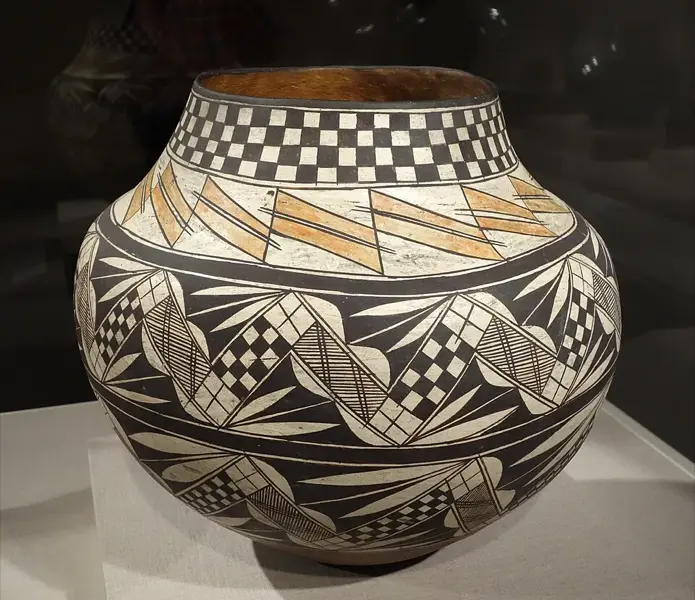
Metropolitan Museum of Art, CC0
- Traditional hand-coiled construction (not wheel-thrown)
- Polychrome decoration using mineral and vegetal pigments
- Classic Acoma geometric and avian design motifs
- Thin-walled construction — a hallmark of Acoma skill
No chips, cracks, or repairs visible. Surface has minor wear from handling. Painted designs are well-preserved with strong color contrast.
- Minor surface handling wear
Approximately 10 inches tall, 12 inches diameter. Traditional olla form.
Acoma Pueblo pottery represents an unbroken ceramic tradition spanning over a thousand years. Pre-1920 pieces are increasingly valued as examples of indigenous art created before the expansion of the tourist market. Museums and institutions actively collect historic Pueblo pottery, supporting market values.
Maria Martinez Black-on-Black Jar
$15,000circa 1940
Signed piece by the most famous Pueblo potter, San Ildefonso Pueblo
Same general category; named artist pottery commands significant premiums
Zuni Polychrome Olla
$5,000circa 1900
Large storage jar with deer and heartline deer motifs
Similar era and region; different pueblo tradition with distinct designs
Hopi Polychrome Bowl
$3,000circa 1910
Sikyatki-revival style bowl with bird and migration motifs
Contemporary Pueblo pottery from a neighboring tradition
A handsome Acoma Pueblo polychrome jar from the late 19th or early 20th century, displaying the geometric precision and thin-walled construction for which Acoma pottery is renowned. The strong market for Native American art, bolstered by museum acquisitions and collector interest, supports steady appreciation. Pre-1920 pieces are particularly valued as they predate the tourist-oriented production era. Authentication by a specialist in Southwest Native American art is recommended.
Acoma pottery should be hand-coiled, not wheel-thrown. Look for slight irregularities in the wall thickness. The clay should be lightweight (Acoma is famous for thin walls). Pigments should be mineral-based (iron and manganese) applied with a yucca brush. Modern reproductions may use commercial paints — check under UV light. Pre-1920 pieces lack the "tourist" aesthetic of later production.
- Display on a padded surface or museum-quality mount
- Do not wash — clean only with a soft, dry brush
- Keep away from areas of high humidity or temperature fluctuation
- Handle with clean dry hands, supporting the base